

What Is a Web3 Wallet? How It Works and Types
A web3 wallet is a digital wallet that stores your private keys and allows you to hold your digital assets and use decentralized applications on a blockchain. Unlike traditional wallets where your money is held in an account maintained by a bank or some company, a web3 wallet gives you direct control over assets recorded on the blockchain and allows you to move them.
The wallet itself does not contain any coins or tokens. It holds the keys that prove the ownership of the assets on the blockchain and signs the transactions using these keys. This single feature accounts for most differences between web3 wallets and regular bank apps or other payment services.
How a web3 wallet works
Web3 wallets use public and private key cryptography. Creating a web3 wallet involves generating a pair of keys. The public key generates your wallet address – an alphanumeric string that you use to receive funds, similar to sharing your email address. The private key remains hidden and authorizes all your transactions.
Let us make a comparison. The wallet address is like a mailbox number that anyone can see and drop letters into, and the private key is the key to open the mailbox. Whoever has access to the private key is in control of the assets, and that is why protecting the private key is crucial.
Web3 wallets never ask you to use a raw private key directly. Instead, they provide you with a recovery phrase or seed phrase, a list of 12 or 24 simple words that allow you to recover your wallet on a new device. Therefore, you need to write it down and store it offline.
When connecting to a dApp, the web3 wallet serves as both your identity and authorization tool. The decentralized application requests an action from the user, and after you review it, the web3 wallet authorizes it by signing it using your private key. No operation can happen without your consent.
How a web3 wallet differs from a traditional crypto wallet
The term crypto wallet is generic and describes any tool for storing keys of digital assets, including simple apps that hold just a single coin. A web3 wallet is a particular type of crypto wallet designed to do more than just store value. It allows you to connect to decentralized applications, store tokens and NFTs, and participate in on-chain activity.
In contrast to traditional wallets and many exchange accounts, a non-custodial web3 wallet does not rely on a company to maintain the wallet and control your assets. The main difference lies in the control over the funds. In the case of a bank app, the company controlling it can freeze and reverse any transaction. When using a self-custody web3 wallet, the only entity that can authorize a transfer is the wallet owner. This freedom comes with great responsibility for asset security.
Types of web3 wallets
There are two criteria by which the web3 wallet can be classified. These criteria are whether the wallet is custodial or non-custodial and whether the wallet uses an online or offline connection. Being aware of both of these aspects allows you to choose the best solution.
Custodial wallet
A custodial wallet is maintained by a third party, usually a crypto exchange, that holds your private keys. It works similarly to an online bank account since you enter the system using your password, and the provider is able to recover your account in case you forget your credentials. It is an easier solution for newcomers, but you need to trust the provider with your assets. Moreover, you do not have access to the keys yourself.
Non-custodial wallet
A non-custodial wallet, or self-custody wallet, allows you to control your own private keys. Nobody else can touch your assets or initiate transfers unless you authorize them. This approach reflects the concept of web3 where users are in control of their own assets. But at the same time, in case you lose your recovery phrase, nobody is able to recover your access.
Hot wallet, hardware wallet, and software wallet
Also, web3 wallets can differ depending on how they connect to the Internet. A hot wallet is always online and consists mostly of software wallets such as browser extensions and smartphone apps. The connection makes them easy and convenient for daily usage but also more vulnerable to online attacks.
A hardware wallet is an offline device that stores your private keys. This type of storage is also referred to as cold storage. It is the safest way to store your assets. Well-known examples of hardware wallets are Ledger and Trezor wallets. Usually, people use both software wallets and hardware wallets. The former is used for daily activities, and the latter is chosen for long-term storage.
Smart contract wallets
A smart contract wallet, or a smart wallet, operates using the programmable smart contract code. On Ethereum, an account abstraction technology also known as ERC-4337 enables creating smart contract wallets without changing the network architecture. It allows adding a variety of features that a standard wallet does not have, such as social recovery via trusted contacts, spending limits, transaction batching, and sponsorship, allowing you to start working with the network without holding the network’s base token.
What is a DeFi wallet?
Along with the web3 wallet, you might often come across the term DeFi wallet. The DeFi wallet meaning is pretty simple: it is a non-custodial web3 wallet that is used to connect to decentralized finance applications such as lending, borrowing, staking, and token swaps. So what is a DeFi wallet in everyday usage? It is the same self-custody tool as the web3 wallet, distinguished by the way it is used. Because you keep your own keys, you can connect directly to DeFi protocols and interact with dApps without a middleman holding your funds.
Key features of web3 wallets
In general, a web3 wallet can be considered a digital wallet created specifically for blockchains. The main features of web3 wallets include:
- Self-custody and control. The wallet allows you to own your assets without needing a third party to authorize the transactions.
- Multi-chain support. Many web3 wallets support multiple blockchains, allowing you to hold your assets in one wallet on several networks.
- dApp connection. Web3 wallets enable you to connect to decentralized applications, log in without using a username and password, and authorize on-chain operations.
- Token and NFT storage. Web3 wallets allow you to store both fungible tokens and NFTs, and also usually display your NFT collection.
- High security. Web3 wallets use advanced encryption algorithms to protect your private keys stored in your wallet.
- Additional features. Most web3 wallets offer extra tools such as token swapping, staking, and transaction previewing in-app.
All of these characteristics combined mean that the wallet provides a single point of access to the web3 ecosystem, which is why it is at the center of most operations you perform on-chain.
Planning to build a Web3 wallet?
Creation of a web3 wallet, or adding one to an existing project, requires considerable engineering effort in regard to key management, secure signing, and dApp connections. Nomium is a blockchain development agency that helps teams create wallet infrastructure and web3 applications. If you have a project in mind, our developers can help you build it the right way.
Web3 wallet security
The security of web3 wallets is almost completely dependent on how well you can protect your private key and recovery phrase. In case of a self-custody wallet, there is no central authority that can reverse a mistake or help you recover your access. Prevention is the key to avoiding problems.
A couple of practices can protect your wallet against the majority of potential threats:
- Do not share your recovery phrase or private key with anyone. No legitimate support team will ever ask for it.
- Store your recovery phrase offline using paper or another durable material and keep multiple copies of it in different locations.
- Download web3 wallets only from official sources and verify the publisher and web address before installing.
- Approve transactions only after reviewing them, and be careful when granting permissions to any decentralized application.
- Use a hardware wallet in case of large balances since offline storage eliminates the most common attack vectors.
The most common mistakes are quite simple and include entering your recovery phrase on a fraudulent website, authorizing a malicious contract that can drain your wallet, and storing your recovery phrase in a photo or cloud note accessible to any kind of malware. Avoiding these mistakes will prevent most of the possible losses.
Popular web3 wallets
There are several popular web3 wallets that have become standard entry points to web3. Each has its own unique advantages, and many can serve both as browser extensions and mobile wallets.
- MetaMask is the most popular web3 wallet for Ethereum and other networks compatible with it. MetaMask is a non-custodial wallet developed by Consensys, available as both a browser extension and a smartphone app, that lets you connect to a huge number of dApps.
- Phantom first became popular on the Solana network. Currently, it is a multi-chain wallet that also supports Ethereum, Polygon, and Bitcoin. Its advantage is a clear and friendly interface for newcomers.
- Trust Wallet is a popular non-custodial wallet that supports a wide range of blockchains, making it a good choice for managing many kinds of assets from a smartphone.
- Coinbase Wallet is a non-custodial web3 wallet. It should be distinguished from the Coinbase exchange account, which is custodial and managed by the company. Coinbase Wallet lets you hold your private keys and connect to dApps.
- Rainbow is a wallet focused on Ethereum with a friendly interface for newcomers.
For long-term storage, hardware wallets such as Ledger or Trezor are usually preferred, and people often use both hardware and software wallets. Nowadays, it is normal practice to use web3 wallets on mobile devices, and a smartphone wallet is capable of performing almost everything that a browser extension can: connecting to dApps via an integrated browser.
How to create a web3 wallet
Setting up a web3 wallet is a quick process that takes only a few minutes. The screens will vary depending on the provider, but the process is identical for most non-custodial wallets.
- Select a reliable wallet and download it from the official web address or app store.
- Launch the wallet app and choose to create a new wallet.
- Write down the recovery phrase the wallet shows you during the creation process, and store it offline. Do not take a screenshot.
- Set up a password or biometric lock on your device for daily usage.
- Confirm the recovery phrase when requested and add some funds or connect to a dApp.
After this process is completed, you can use your web3 wallet to send and receive assets, store NFTs, and sign in to decentralized applications.
Choosing the right web3 wallet
Choosing the right web3 wallet is a matter of how you plan to use it. Choosing the appropriate web3 wallet means selecting the tool that fits your needs, not the best-known name. Several questions will guide you in the right direction:
- Control. Do you prefer to own your keys, or would you rather the provider manage them? This will point you to a non-custodial or custodial wallet.
- Networks. Which blockchains do you use? Choose a wallet that supports them.
- Amount and frequency. In case of small frequent transactions, a hot software wallet is the best choice. For larger infrequent transactions, you will need a hardware wallet.
- Level of experience. There are wallets that are designed specifically for beginners and have a simple and easy-to-use interface, and there are wallets that give access to additional settings for advanced users.
Whether you need a web3 wallet at all depends on your goals. If you use your wallet to buy and hold cryptocurrencies on an exchange, a custodial account is usually enough. In case you want to connect to dApps, hold NFTs, or use decentralized finance, a non-custodial web3 wallet is the tool you will need.
Role of web3 wallets in web3 ecosystem
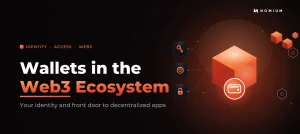
The role of web3 wallets goes far beyond storage. A wallet becomes your identity and the point of access to the web3 ecosystem. Using web3, you never create a separate account for each service. Instead, you use your wallet to connect to decentralized applications, and the wallet transfers your identity and assets from one application to another.
It is a significant change in the whole web3 landscape. Decentralized applications, from finance protocols to games and marketplaces, treat the wallet as the login. This is why the wallet is often referred to as the front door to web3 applications, and why so many journeys to the web3 world start with setting up a wallet.
Future of web3 wallets
The future of web3 wallets involves creating a safer and simpler experience. The implementation of smart contract wallets and account abstraction technology aims to eliminate the most difficult parts of web3 wallets, such as memorization of a seed phrase or having a network token just to pay fees. Social recovery, spending limits, and sponsored transactions are becoming a reality, and with their implementation wallets will feel closer to familiar apps.
With the maturing of these technologies, working with web3 might become less technical, providing broader possibilities for self-custody.
Rate this article!









Leave your comment